How Eligibility Checks Determine Access to Multiplier Enhancements in Live Dealer and Event Wagering Scenarios
Written by Dana Reed · Aug 5, 2026
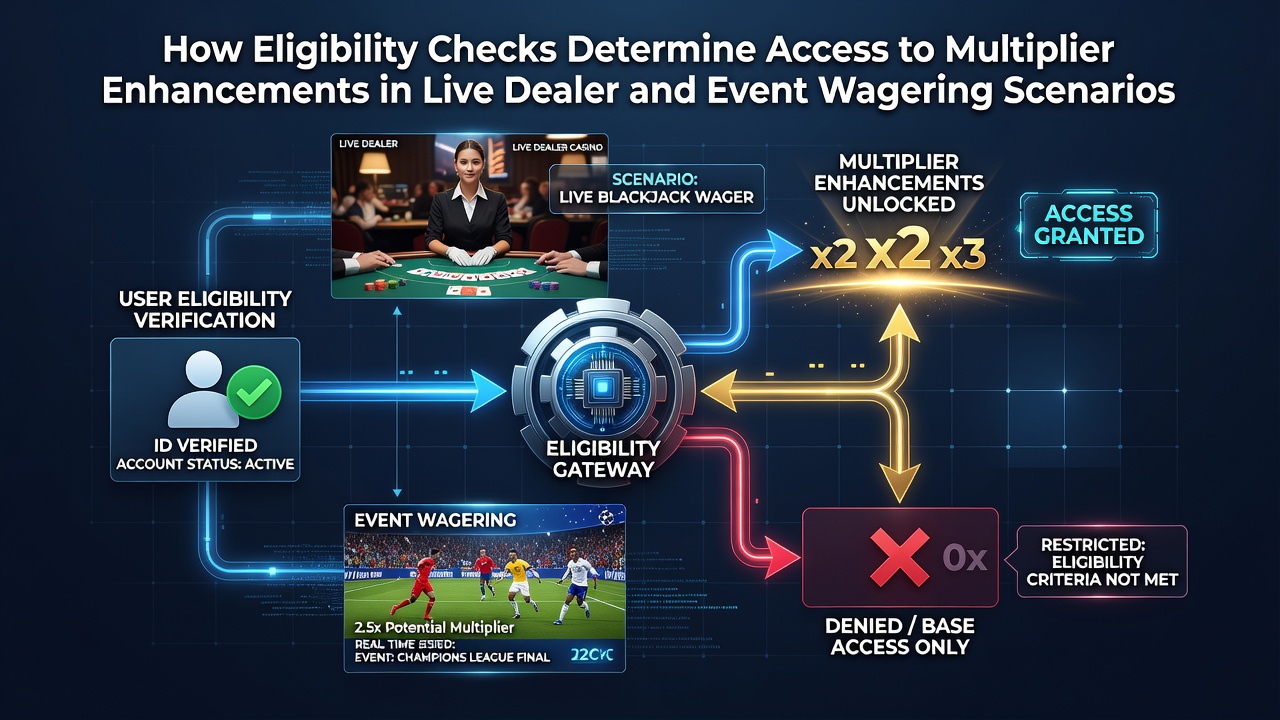
How Eligibility Checks Determine Access to Multiplier Enhancements in Live Dealer and Event Wagering Scenarios
Eligibility checks form the gatekeeping mechanism that platforms use to grant or deny multiplier enhancements during live dealer sessions and event-based wagering, and these processes rely on layered verification protocols that examine user data before any boosted payout structures activate. Operators run automated scans alongside manual reviews to confirm compliance with internal rules, and this determines whether a player receives multipliers on table game wins or elevated returns on sports event outcomes. Data from regulatory filings shows that such checks reduce unauthorized access by significant margins each quarter.
Core Components of Multiplier Enhancements
Multiplier enhancements increase base returns in live dealer environments like blackjack or roulette, while in event wagering they apply to specific match or race results through adjusted odds or bonus multipliers on successful bets. Platforms tie these features to account status, and eligibility verification must clear before activation occurs. Studies from the University of Nevada, Las Vegas Center for Gaming Research indicate that verification sequences typically complete within seconds for most automated systems, though flagged accounts trigger extended reviews lasting up to 48 hours.
Verification Layers in Live Dealer Settings
Live dealer platforms integrate real-time identity confirmation that cross-references submitted documents against third-party databases, and this step precedes any multiplier application on game rounds. Age verification combines with address validation to establish jurisdiction compliance, while transaction history reviews flag patterns that might exclude users from enhancement programs. Observers note that these checks intensify during peak hours when live tables see higher volumes, ensuring that only verified accounts access features like 1.5x or 2x payout boosts on qualifying wins.
Additional protocols examine prior bonus usage to prevent stacking, and systems automatically suspend multiplier access if recent activity violates frequency limits set by the operator. Research indicates that such measures maintain platform integrity across thousands of daily sessions without disrupting legitimate play.
Event Wagering Eligibility Protocols
Event wagering scenarios apply similar yet distinct checks because multipliers often attach to live odds during matches or competitions, and eligibility hinges on account standing at the moment of bet placement. Geo-location services confirm the user operates within approved regions, while account tenure and deposit consistency determine access tiers. Figures from industry analyses reveal that accounts under 30 days old face stricter scrutiny before receiving event-specific multipliers, and this timing requirement appears in operator terms across multiple markets.
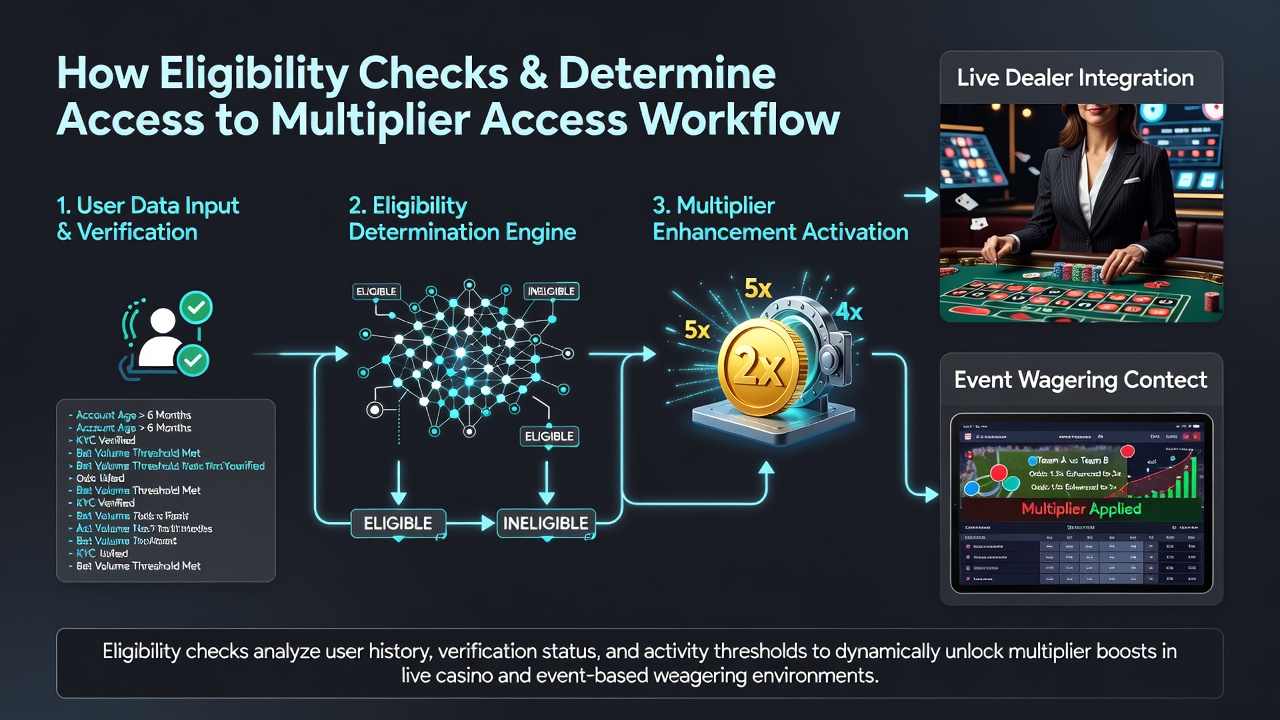
Systems also review bet volume and win rates to identify potential manipulation risks, and flagged profiles lose enhancement privileges until cleared through additional documentation. As of August 2026, updated compliance frameworks in several jurisdictions require documented audit trails for all multiplier grants in live event contexts, pushing operators to refine their automated filters further.
Common Criteria Across Both Formats
Shared eligibility factors include full Know Your Customer completion, absence of self-exclusion flags, and adherence to minimum activity thresholds that demonstrate sustained engagement rather than one-time access attempts. Platforms compile these elements into scoring models that assign access levels, and higher scores unlock greater multiplier values. Data shows that integrated systems handling both live dealer and event wagering maintain separate yet synchronized databases to apply consistent rules without overlap conflicts.
Take one platform that adjusted its verification sequence in early 2026 after internal audits revealed gaps in cross-category tracking, and the change led to more precise multiplier distribution across user segments. Those who study these systems often discover that manual intervention rates drop when initial automated checks incorporate machine learning updates trained on historical denial patterns.
Conclusion
Eligibility checks ultimately control multiplier access by combining identity, behavioral, and jurisdictional data into decisive outcomes that shape user experiences in live dealer and event wagering environments. Platforms continue refining these processes through technology and regulatory alignment, and the resulting framework supports secure operations while defining clear pathways for enhancement availability.