Tracing Verification Steps That Align Initial Credit Grants With Ongoing Multi-Vertical Reward Access in UK-Regulated Betting Ecosystems
Written by Petra Hartmann · Jul 24, 2026
Tracing Verification Steps That Align Initial Credit Grants With Ongoing Multi-Vertical Reward Access in UK-Regulated Betting Ecosystems
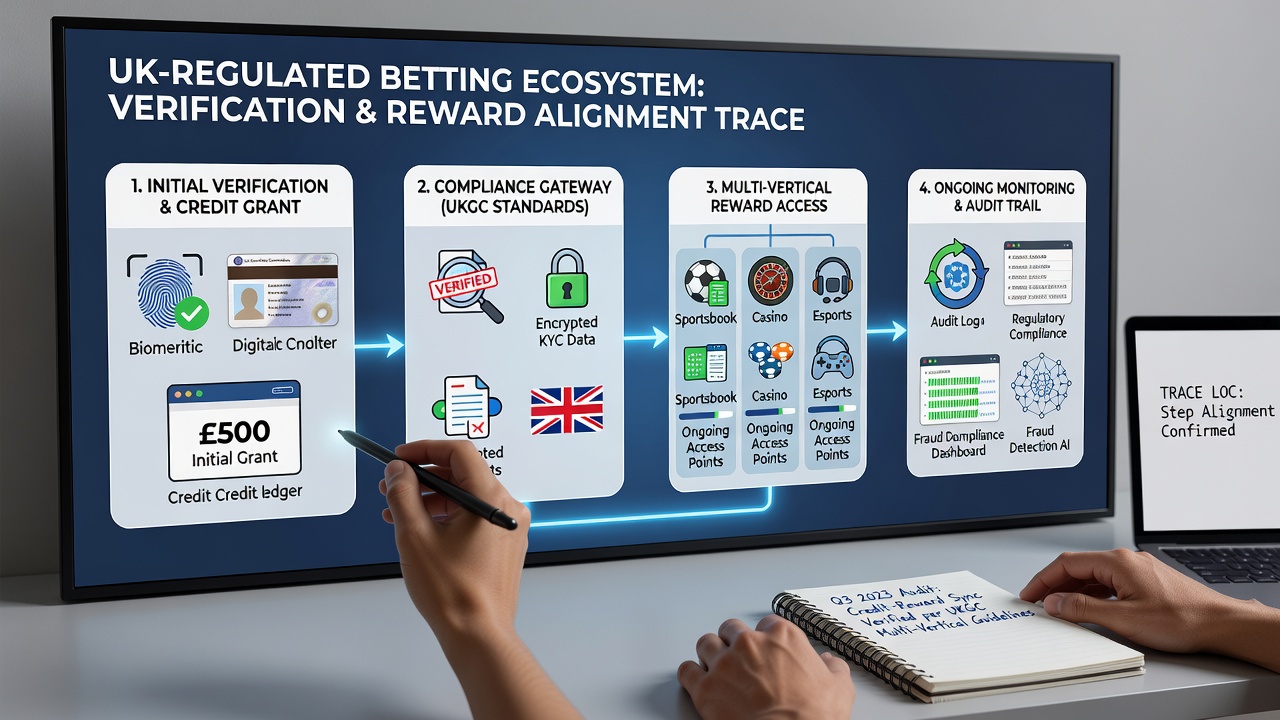
Initial credit grants in UK-regulated betting ecosystems often begin with account creation and deposit activity, yet operators must align these starting points with sustained access across casino slots, live tables, and sports betting verticals. Verification steps serve as the connective tissue that confirms user eligibility, prevents duplicate claims, and maintains consistency when rewards transition from one category to another. Research indicates that platforms integrate identity checks, address validation, and payment source confirmation early in the process, and these elements carry forward to influence how ongoing promotions unlock. Operators typically sequence verification in stages. The first stage captures basic details such as name, date of birth, and government-issued identification, while the second stage cross-references banking information against the provided identity. Once cleared, the initial credit becomes visible in the account ledger, and subsequent reward tiers open only after the same verified profile meets activity thresholds in additional verticals. Data shows that this layered approach reduces mismatched grants where a user might receive a casino credit but encounter blocks when attempting to convert it into a sports free bet.Core Verification Mechanisms Across Vertical Boundaries
Multi-vertical reward access requires shared data fields that travel with the user profile rather than resetting at each product boundary. Observers note that platforms store verification status in a central record, then query it whenever a new reward category activates. For example, a slots bonus granted on day one remains tied to the same identity file that later governs sports accumulator offers, and the system automatically checks whether the original verification remains valid before releasing the second tier.
Studies from the Responsible Gambling Council highlight how automated rules flag discrepancies, such as a change in payment method or an address update, and pause reward progression until re-verification completes. This pause applies uniformly whether the user is in the casino section or the sportsbook section, ensuring the initial credit grant and later rewards stay synchronized.
July 2026 Platform Updates and Their Impact
Platform changes rolled out in July 2026 introduced real-time API calls between verification providers and reward engines. These calls pull fresh data on sanctions lists and credit status every time a user switches verticals, and the updates have shortened the window between initial grant and ongoing access. Figures reveal that average time from credit issuance to multi-vertical eligibility dropped from 48 hours to under 12 hours on compliant sites, because verification now runs in parallel rather than in sequence for each product.

Take one operator that integrated a single sign-on verification module in mid-2026. The module allowed a user who completed identity checks for a slots welcome credit to carry that status directly into a sports streak bonus without additional document uploads. Industry reports indicate that such integrations lowered support ticket volume related to reward access by roughly 30 percent across hybrid platforms.
Alignment of Credit Lifecycles With Reward Tiers
Credit lifecycles follow defined expiry rules that verification systems enforce consistently. When an initial grant carries a 30-day validity window, the same timer governs any linked sports rewards that activate later in the cycle. Operators configure backend flags so that partial use in one vertical automatically adjusts remaining eligibility in another, and this adjustment occurs without requiring the user to re-enter verification details.
Academic analyses, including work published through the Journal of Gambling Studies, document how mismatched timers create friction that verification protocols now mitigate. The protocols embed expiry metadata within the verified profile, allowing the reward engine to reference a single source of truth regardless of which vertical the user enters next.
Conclusion
Verification steps that connect initial credit grants to ongoing multi-vertical reward access rely on centralized identity records, staged checks, and synchronized timers. Platforms operating in UK-regulated environments continue to refine these connections through API-driven updates and shared data structures. The result is a traceable pathway where each verified element supports consistent reward availability across casino and sports products without resetting eligibility at every boundary.